The Program
10:00
Opening - Live translation available in English. 
- Linda Gernitz: Opening - Live translation available in English.
- Prof. Dr. André Ludwig (Leipzig University) and Ingolf Römer (Institute for Applied Informatics): Greetings from InfAI - Live translation available in English.
- Prof. Dr. Eva Inés Obergfell (Leipzig University): Greetings from the University of Leipzig - Live translation available in English.
- Dr. Beate Ginzel (Digital City Department, City of Leipzig): Greetings from the City of Leipzig - Live translation available in English.
10:45
Keynote
Keynote: The Durkheim Test: How Close Are Artificial Intelligence Algorithms to Us?
Vita
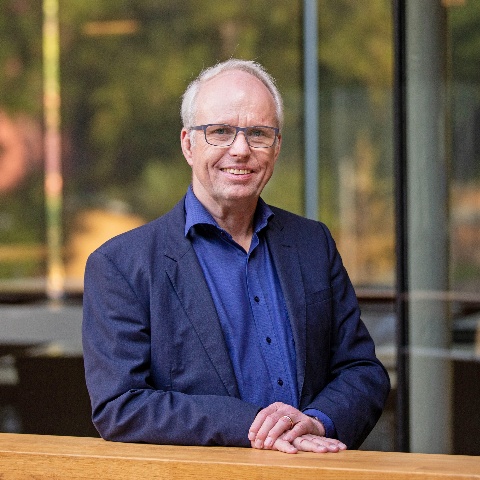
Professor Dirk Baecker served as a senior professor of organizational and social theory at Zeppelin University in Friedrichshafen on Lake Constance until 2025. After studying sociology and economics in Cologne and Paris, he earned his doctorate and habilitation at Bielefeld University. Since 1996, he has taught sociology at Witten/Herdecke University and Zeppelin University. His research focuses on sociological theory, cultural theory, and the “next society” of electronic media. Publications on this topic include: Studies on the Next Society (Suhrkamp, 2007), 4.0 or the Gap Left by the Computer (Merve, 2018), and Digitalization (Suhrkamp, 2026). Website: dirkbaecker.de.
In his keynote address at Data Week, Professor Dirk Baecker offers a fundamental perspective on the relationship between humans and machines in the age of digitalization. The focus is not on the oft-discussed question of whether technology will replace hard labor or human fallibility, but rather on the growing ability of digital systems to integrate cooperatively and communicatively into human interactions. Digital technologies and artificial intelligence act as a mirror of our society—and at the same time reveal how difficult it is for us to recognize ourselves in them. How do we communicate meaningfully with machines? How much closeness is productive, and how much distance is necessary? And how much interconnection between humans and digital systems can a digital city tolerate? The keynote explores these questions and highlights which patterns of human interaction—particularly in urban spaces—are becoming visible through digitalization. It invites us to rethink what form of digitalization our society needs.
12:30
Panel Discussion: Rethinking State Modernization: From an Administrative State to a Shaping State - Live translation available in English.
Chair:
Dr. Beate Ginzel
(Digital City Department, City of Leipzig)
How can a modern state succeed in not only administering but also actively shaping society? In this panel discussion at Data Week Leipzig, representatives from government, civil society, and digital policy will discuss the future of the state’s capacity to act in an age of crises, complexity, and artificial intelligence. The focus will be on the opportunities and limitations of AI in public administration, the tensions between efficiency and the rule of law, and the question of how government action can once again inspire greater trust and effectiveness.
-
Tiaji Sio
(ProjectTogether): Rethinking State Modernization: From an Administrative State to a Shaping State
-
Gerald Swarat (Fraunhofer-Institut für Experimentelles Software Engineering IESE): make bureaucracy great again - What lies at the end of the rainbow of AI-driven government modernization? (Live translation available in English.)
Anyone who, when discussing AI today, talks only of innovation, progress, productivity, and a “lean government” is overlooking the core issues surrounding power, inequality, and the erosion of the rule of law. Are we facing a state that replaces accountability with probability and arguments with algorithms? Have we truly understood enough about the power and profit interests of those whose technologies we intend to use as the supposed solution to our problems?
- Mirko Mühlpfort (Digital City Department, City of Leipzig):
14:30
Digital data lifecycles: management, archiving, and AI-supported indexing - Live translation available in English.
Chair:
Linda Gernitz
The session highlights the digital lifecycle of public information, from its creation and legally compliant storage to long-term archiving and reuse as open data. Using the practical example of the city administration of Leipzig, the current implementation status, technical and legal framework conditions, and strategic development goals of digital administration will be presented. In addition, researchers will present new freely available data sets for the automatic recognition of handwritten German texts (published via Zenodo) and show how modern AI models contribute to the indexing of analog information in industrial and administrative contexts. The overarching European framework is provided by the EOSC EDEN project, which strengthens strategies for long-term digital archiving and data availability. The session combines governance, technology, and practice and invites interdisciplinary discussion on future infrastructures and usage perspectives.
-
Michael Blosfeld (Office for Digitization and Organization, City of Leipzig): Tomorrow's archiving – the data lifecycle in public administration
Public administration files and information go through a complex life cycle that is regulated by law from data creation to deletion or archiving and has been practiced for many years. But how do the legal requirements that form the basis of the digital life cycle translate to digital administration? In this context, the goal of electronic archiving is always to generate open data. During the event, which will feature a fluid transition between lectures and workshops, the current status and development goals will be clearly illustrated using the example of Leipzig’s city administration. The presentation will also explicitly address limiting factors such as legal requirements, capacities, interface developments, and expectations. The event will conclude with an interdisciplinary and open-ended discussion about prospects, expectations, and visions for the future.
-
Dr. Thomas Burghardt (ScaDS.AI Dresden/Leipzig and Leipzig University): Modern OCR methods for handwriting and labels in the German-speaking context
Handwritten texts are not only found in historical archives, but also in modern industrial everyday life—for example, on labels, forms, or protocols. However, their automatic recognition poses particular challenges for data science, especially in German-speaking countries, where freely available, diverse handwriting datasets are rare. In this presentation, we introduce two new, publicly accessible datasets created from 852 handwritten German pages. Both datasets have been published on Zenodo and are freely available to researchers in linguistics, computer science, and related disciplines. The presentation shows how OCR models can be successfully transferred to real-world applications. The contribution combines open data, modern AI methods, and concrete industrial use cases—and shows how handwriting recognition can advance both research and practice today.
-
Micky Lindlar (Technische Informationsbibliothek (TIB)): The EOSC EDEN Re-Use Fitness Framework: What, how, for whom, and why archive?
Digital data is everywhere. In research, it often serves as both the input and output of processes. But can and should this ever-growing volume of data be preserved indefinitely? Who decides which data to preserve and make available, and based on what criteria? And what processes are needed to ensure long-term archiving? The EU-funded project EOSC EDEN (European Open Science Cloud - Enhancing Digital Preservation Strategies at European and National Level) is developing a framework to support data identification processes for long-term archiving. This presentation offers an introduction to the challenges of long-term digital archiving of research data and summarizes the goals and results to date of the EOSC EDEN project.
16:00
No Power – No Data?! - So how do crisis-related goods get from A to B?
Malte Kania
(Anhalt University of Applied Sciences),
Prof. Dr.-Ing. Paul Geoerg
(Akkon Hochschule für Humanwissenschaften),
Timon Dischmann
(Digital City Department, City of Leipzig) and
Dr. Tom Assmann
(Anhalt University of Applied Sciences)
Workshop: What happens when critical infrastructure fails—electricity, the internet, mobile networks? This workshop will explore this very question in a practical, hands-on way. Following a brief, interactive introduction to participants’ own digital dependencies, attendees will receive concise insights into realistic crisis scenarios, cascading effects of infrastructure failures, and existing initiatives related to cargo bike logistics and crisis communication. Building on this, participants will collaboratively identify key vulnerabilities—particularly in the area of communication—and prioritize them.
In the second part, concrete solutions will be developed: How can physical mobility (e.g., bicycles), decentralized data infrastructures (e.g., stable emergency Wi-Fi/emergency boxes), and analog fallback systems be effectively combined? Which approaches are robust, scalable, and promote data autonomy? The workshop is aimed at anyone involved in crisis resilience, communication, urban logistics, or sustainable infrastructure who would like to collaborate on developing new, resilient solutions.